Ngũgĩ wa Thiong’o: The Immortal Voice of African Literature

Ngũgĩ wa Thiong’o: The Immortal Voice of African Literature

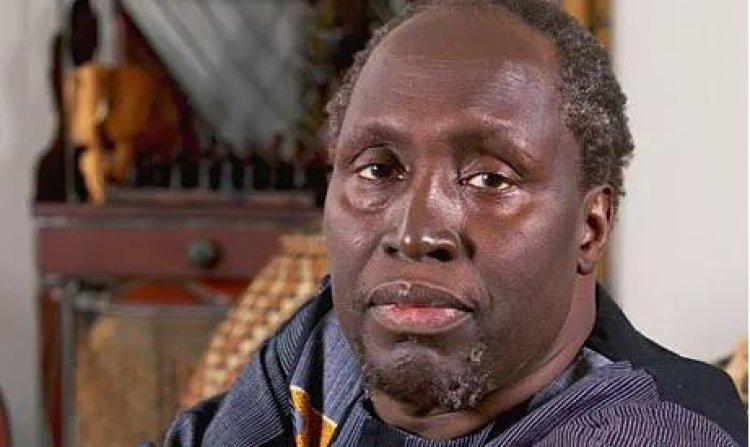
The world mourns the passing of Ngũgĩ wa Thiong’o, one of Africa’s most prolific literary giants and fearless champions of linguistic and cultural decolonization. His death not only marks the end of a remarkable literary era but reignites global reflection on the role of literature in reclaiming African identity and resisting cultural imperialism.

Ngũgĩ’s pen was never just about stories it was about struggle, dignity, and justice. His words challenged systems and inspired generations, and his legacy continues to echo in classrooms, libraries, and freedom movements around the world.

 A Literary Life Rooted in Resistance

Born James Ngugi in 1938 in Limuru, Kenya, Ngũgĩ wa Thiong’o lived through the turbulence of colonial rule and the Mau Mau uprising—an experience that indelibly shaped his worldview and his art. He debuted as an author with Weep Not, Child (1964), the first English-language novel published by an East African. This novel, along with The River Between (1965) and A Grain of Wheat (1967), gained him international attention for his vivid portrayal of the colonial encounter and African resistance 

But for Ngũgĩ, the battle wasn’t just political it was cultural.

Decolonising the Mind: A Radical Turn

In 1977, Ngũgĩ made a bold and symbolic decision to stop writing in English and begin writing in Gikuyu, his mother tongue. His play Ngaahika Ndeenda (I Will Marry When I Want), co-written with Ngũgĩ wa Mirii, critiqued post-independence neocolonialism and landed him in prison for a year without trial. There, he wrote Caitaani Mutharabani (Devil on the Cross, 1980) on toilet paper—a testament to his unbreakable spirit 

Ngũgĩ’s radical turn was best captured in his landmark essay collection Decolonising the Mind (1986), in which he argued that language is both a vehicle of culture and a battlefield of identity. He insisted that Africans must write in African languages to reclaim their cultural agency a view that sparked debate but profoundly reshaped African literary discourse 

A Global Impact Beyond Borders

Though he left Kenya under threat in 1982 and lived in exile in the U.K. and the U.S., Ngũgĩ never stopped writing, teaching, or agitating for justice. He became a respected professor at Yale University, then at the University of California, Irvine. His literary output from Petals of Blood (1977) to Wizard of the Crow (2006)—remained unflinching, imaginative, and unapologetically African.

His works have been translated into more than 30 languages, studied across continents, and cited in discourses from postcolonial studies to political theory 

The Special Signature of Ngũgĩ’s Writing

What set Ngũgĩ apart was not just the themes he chose, but how he told his stories. He wove folklore, proverbs, and oral traditions into novels, plays, and essays, blending literary craft with cultural preservation. He turned the novel into a space for both critique and celebration a tool to reflect African realities, challenge power, and reimagine futures.

Ngũgĩ’s literary vision was holistic: he saw the writer as a conscious voice of the people, a cultural worker whose responsibility was to awaken, agitate, and educate.

A Flame That Never Dies

Ngũgĩ wa Thiong’o may have departed, but his legacy is indestructible. His voice will continue to ring through generations of writers, students, and activists who believe in the power of literature to liberate minds and societies.
Ngũgĩ wa Thiong’o: The Immortal Voice of African Literature

Ngũgĩ wa Thiong’o: The Immortal Voice of African Literature

The world mourns the passing of Ngũgĩ wa Thiong’o, one of Africa’s most prolific literary giants and fearless champions of linguistic and cultural decolonization. His death not only marks the end of a remarkable literary era but reignites global reflection on the role of literature in reclaiming African identity and resisting cultural imperialism.

Ngũgĩ’s pen was never just about stories it was about struggle, dignity, and justice. His words challenged systems and inspired generations, and his legacy continues to echo in classrooms, libraries, and freedom movements around the world.

 A Literary Life Rooted in Resistance

Born James Ngugi in 1938 in Limuru, Kenya, Ngũgĩ wa Thiong’o lived through the turbulence of colonial rule and the Mau Mau uprising—an experience that indelibly shaped his worldview and his art. He debuted as an author with Weep Not, Child (1964), the first English-language novel published by an East African. This novel, along with The River Between (1965) and A Grain of Wheat (1967), gained him international attention for his vivid portrayal of the colonial encounter and African resistance 

But for Ngũgĩ, the battle wasn’t just political it was cultural.

Decolonising the Mind: A Radical Turn

In 1977, Ngũgĩ made a bold and symbolic decision to stop writing in English and begin writing in Gikuyu, his mother tongue. His play Ngaahika Ndeenda (I Will Marry When I Want), co-written with Ngũgĩ wa Mirii, critiqued post-independence neocolonialism and landed him in prison for a year without trial. There, he wrote Caitaani Mutharabani (Devil on the Cross, 1980) on toilet paper—a testament to his unbreakable spirit 

Ngũgĩ’s radical turn was best captured in his landmark essay collection Decolonising the Mind (1986), in which he argued that language is both a vehicle of culture and a battlefield of identity. He insisted that Africans must write in African languages to reclaim their cultural agency a view that sparked debate but profoundly reshaped African literary discourse 

A Global Impact Beyond Borders

Though he left Kenya under threat in 1982 and lived in exile in the U.K. and the U.S., Ngũgĩ never stopped writing, teaching, or agitating for justice. He became a respected professor at Yale University, then at the University of California, Irvine. His literary output from Petals of Blood (1977) to Wizard of the Crow (2006)—remained unflinching, imaginative, and unapologetically African.

His works have been translated into more than 30 languages, studied across continents, and cited in discourses from postcolonial studies to political theory 

The Special Signature of Ngũgĩ’s Writing

What set Ngũgĩ apart was not just the themes he chose, but how he told his stories. He wove folklore, proverbs, and oral traditions into novels, plays, and essays, blending literary craft with cultural preservation. He turned the novel into a space for both critique and celebration a tool to reflect African realities, challenge power, and reimagine futures.

Ngũgĩ’s literary vision was holistic: he saw the writer as a conscious voice of the people, a cultural worker whose responsibility was to awaken, agitate, and educate.

A Flame That Never Dies

Ngũgĩ wa Thiong’o may have departed, but his legacy is indestructible. His voice will continue to ring through generations of writers, students, and activists who believe in the power of literature to liberate minds and societies.