Katanga Declares Independence: A New Crisis for the Democratic Republic of Congo?

Katanga Declares Independence: A New Crisis for the Democratic Republic of Congo?

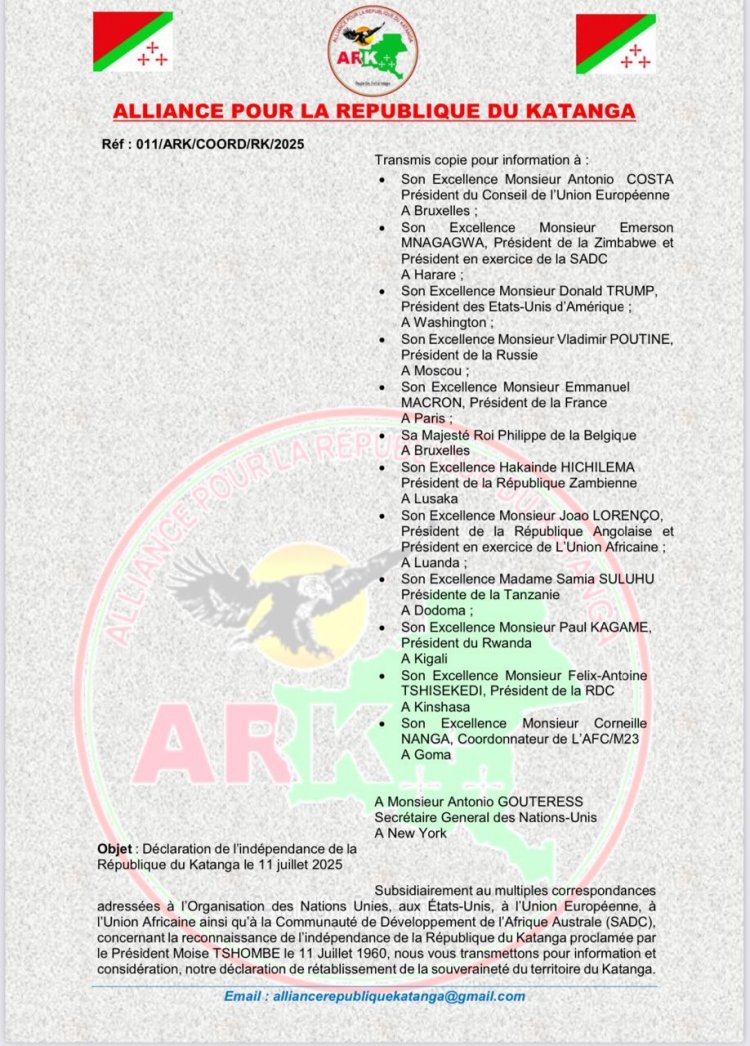
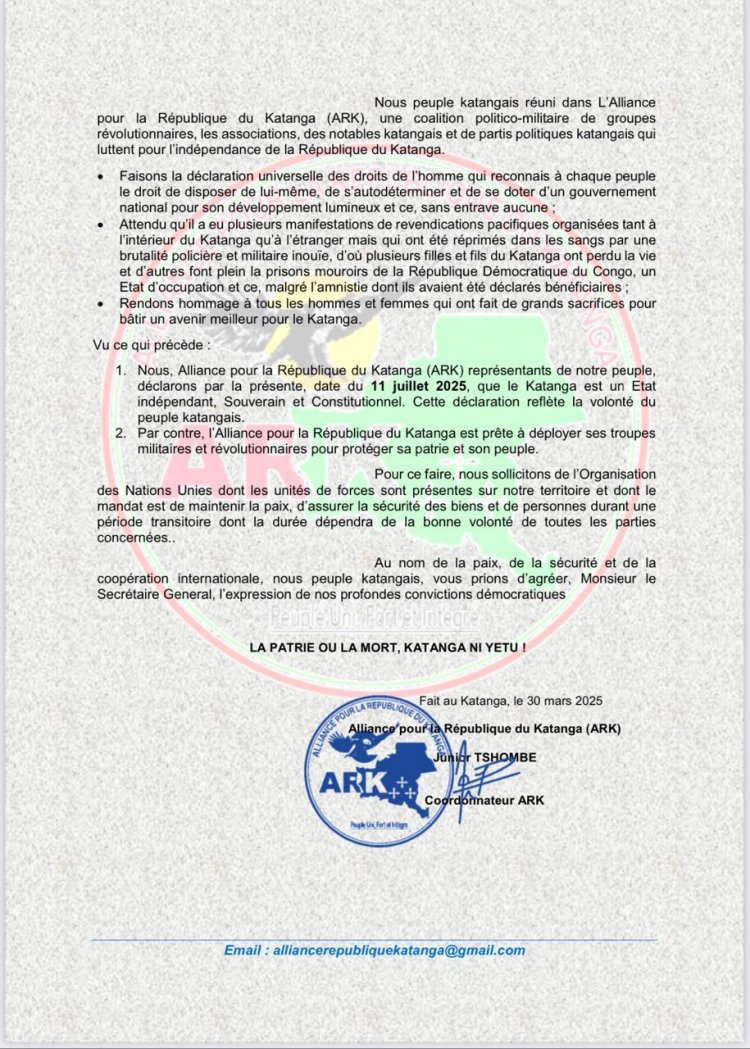
On July 11, 2025, the Alliance pour la République du Katanga (ARK) unilaterally declared the independence of Katanga, a mineral-rich province in the southeastern part of the Democratic Republic of Congo (DRC). The announcement, made by a coalition of political and military groups, has reignited long-standing tensions in the region and raised serious concerns about the stability of the DRC and Central Africa as a whole.

A Historical Perspective: Katanga’s First Attempt at Secession

Katanga's push for independence is not new. In 1960, just days after Congo gained independence from Belgium, Moïse Tshombe, leader of the Katanga province, declared Katanga an independent state. This move, backed by Belgian interests and mercenaries, was driven by Katanga’s vast mineral wealth, including copper, cobalt, and uranium—key resources that fueled global industries. The secession led to the Congo Crisis (1960-1965), a period of violent conflict involving Congolese factions, UN peacekeepers, and foreign mercenaries.

By 1963, Katanga's independence was forcibly ended by the United Nations Operation in the Congo (ONUC), and the province was reintegrated into the DRC. However, tensions never fully dissipated, and pro-independence sentiments remained strong among Katangese nationalists.

Why Independence Now? The ARK’s Justification

The ARK argues that their struggle is based on the right to self-determination, citing the Universal Declaration of Human Rights, which affirms that all peoples have the right to determine their own political status. The group claims that the DRC government has marginalized Katanga, suppressing protests with force and failing to address grievances related to governance, resource control, and human rights.

The ARK also accuses the Congolese government of detaining pro-independence activists, calling the DRC an “occupying state” that has denied Katangese people their freedom. According to their declaration, they are prepared to deploy military forces to protect their new state, a move that could escalate into an armed conflict with the DRC government.

Impact on the DRC’s Stability and Regional Security

Katanga’s declaration of independence poses significant risks to the stability of the DRC and the Great Lakes region. The potential consequences include:

1. Escalation of Conflict: The DRC government is unlikely to recognize Katanga’s independence and may launch military operations to suppress the movement, leading to violent clashes between Congolese forces and ARK fighters.

2. Resource Wars: Katanga is home to some of the world's most valuable mineral reserves. If it successfully secedes, the DRC could lose a substantial portion of its revenue, further destabilizing its fragile economy. This could also attract foreign interests seeking to exploit the province’s wealth.

3. Regional Spillover: Neighboring countries, such as Zambia and Angola, may become involved, either to protect their economic interests or to prevent a similar secessionist movement within their own borders. Additionally, non-state armed groups, including militias operating in North and South Kivu, could take advantage of the chaos to expand their influence.

4. Humanitarian Crisis: A violent crackdown or prolonged fighting could result in mass displacement, worsening the already dire humanitarian situation in the DRC, where millions are internally displaced due to ongoing conflicts

The International Response and the Role of the UN

The ARK has appealed to the United Nations to oversee a transition period to independence and ensure security. However, the UN, which has been operating in the DRC through MONUSCO, has historically backed Congolese territorial integrity. The likelihood of international recognition for an independent Katanga remains low, but external actors—such as China, the United States, and European nations—may have strategic interests in the outcome due to Katanga’s mineral wealth.

What Happens Next?

The DRC government has not yet formally responded, but it is expected to reject the declaration and possibly deploy military forces to prevent Katanga’s secession. The situation remains fluid and highly volatile, with the potential to reshape the geopolitical landscape of Central Africa.

As the world watches, the question remains: Will Katanga’s renewed bid for independence lead to a second Congo Crisis, or is there still a path to a peaceful resolution?
Katanga Declares Independence: A New Crisis for the Democratic Republic of Congo?

Katanga Declares Independence: A New Crisis for the Democratic Republic of Congo?

On July 11, 2025, the Alliance pour la République du Katanga (ARK) unilaterally declared the independence of Katanga, a mineral-rich province in the southeastern part of the Democratic Republic of Congo (DRC). The announcement, made by a coalition of political and military groups, has reignited long-standing tensions in the region and raised serious concerns about the stability of the DRC and Central Africa as a whole.

A Historical Perspective: Katanga’s First Attempt at Secession

Katanga's push for independence is not new. In 1960, just days after Congo gained independence from Belgium, Moïse Tshombe, leader of the Katanga province, declared Katanga an independent state. This move, backed by Belgian interests and mercenaries, was driven by Katanga’s vast mineral wealth, including copper, cobalt, and uranium—key resources that fueled global industries. The secession led to the Congo Crisis (1960-1965), a period of violent conflict involving Congolese factions, UN peacekeepers, and foreign mercenaries.

By 1963, Katanga's independence was forcibly ended by the United Nations Operation in the Congo (ONUC), and the province was reintegrated into the DRC. However, tensions never fully dissipated, and pro-independence sentiments remained strong among Katangese nationalists.

Why Independence Now? The ARK’s Justification

The ARK argues that their struggle is based on the right to self-determination, citing the Universal Declaration of Human Rights, which affirms that all peoples have the right to determine their own political status. The group claims that the DRC government has marginalized Katanga, suppressing protests with force and failing to address grievances related to governance, resource control, and human rights.

The ARK also accuses the Congolese government of detaining pro-independence activists, calling the DRC an “occupying state” that has denied Katangese people their freedom. According to their declaration, they are prepared to deploy military forces to protect their new state, a move that could escalate into an armed conflict with the DRC government.

Impact on the DRC’s Stability and Regional Security

Katanga’s declaration of independence poses significant risks to the stability of the DRC and the Great Lakes region. The potential consequences include:

1. Escalation of Conflict: The DRC government is unlikely to recognize Katanga’s independence and may launch military operations to suppress the movement, leading to violent clashes between Congolese forces and ARK fighters.

2. Resource Wars: Katanga is home to some of the world's most valuable mineral reserves. If it successfully secedes, the DRC could lose a substantial portion of its revenue, further destabilizing its fragile economy. This could also attract foreign interests seeking to exploit the province’s wealth.

3. Regional Spillover: Neighboring countries, such as Zambia and Angola, may become involved, either to protect their economic interests or to prevent a similar secessionist movement within their own borders. Additionally, non-state armed groups, including militias operating in North and South Kivu, could take advantage of the chaos to expand their influence.

4. Humanitarian Crisis: A violent crackdown or prolonged fighting could result in mass displacement, worsening the already dire humanitarian situation in the DRC, where millions are internally displaced due to ongoing conflicts

The International Response and the Role of the UN

The ARK has appealed to the United Nations to oversee a transition period to independence and ensure security. However, the UN, which has been operating in the DRC through MONUSCO, has historically backed Congolese territorial integrity. The likelihood of international recognition for an independent Katanga remains low, but external actors—such as China, the United States, and European nations—may have strategic interests in the outcome due to Katanga’s mineral wealth.

What Happens Next?

The DRC government has not yet formally responded, but it is expected to reject the declaration and possibly deploy military forces to prevent Katanga’s secession. The situation remains fluid and highly volatile, with the potential to reshape the geopolitical landscape of Central Africa.

As the world watches, the question remains: Will Katanga’s renewed bid for independence lead to a second Congo Crisis, or is there still a path to a peaceful resolution?