
REMA, GEF-Funded Project, Caltris Tree Initiative Boosts Rwanda’s Climate Adaptation Efforts

REMA, GEF-Funded Project, Caltris Tree Initiative Boosts Rwanda’s Climate Adaptation Efforts

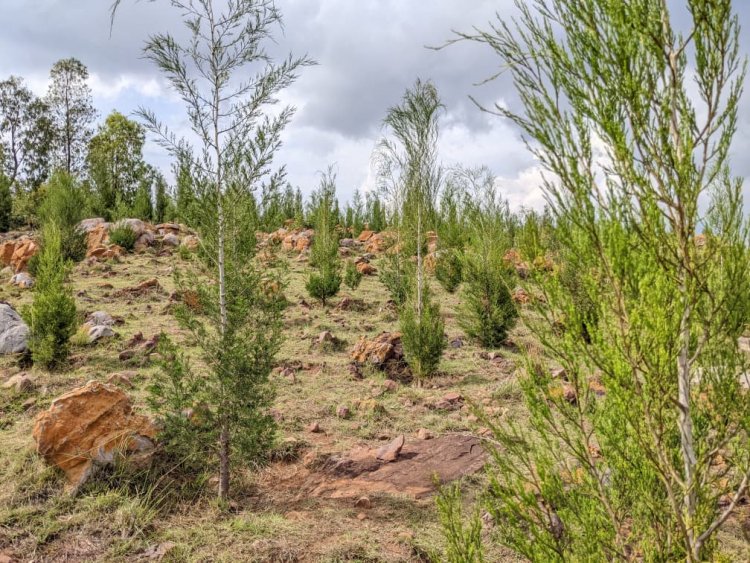
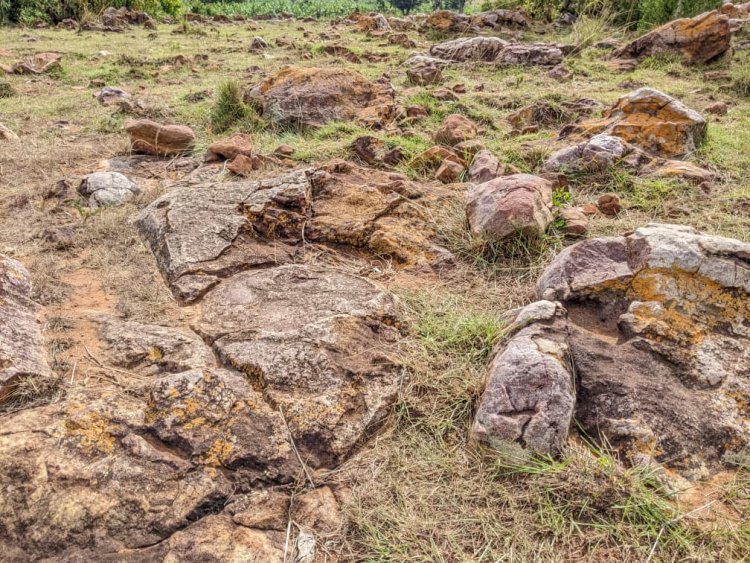
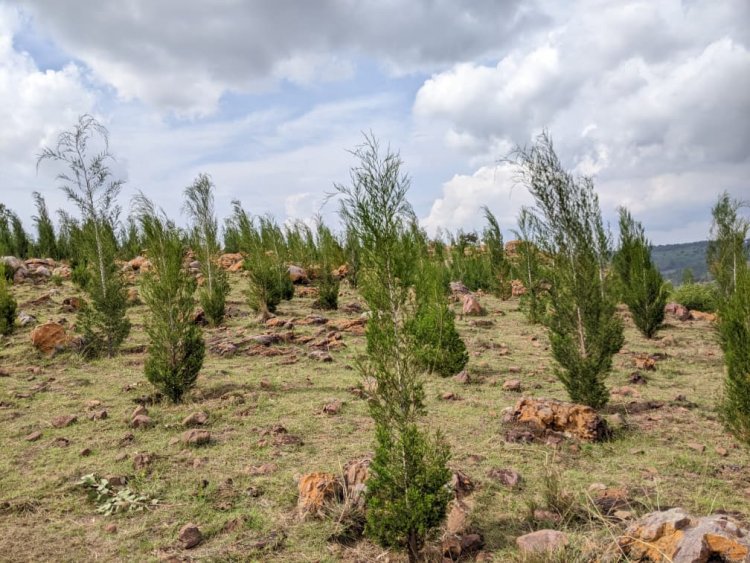
The Rwanda Environment Management Authority (REMA), in partnership with the NAP Kora Wigire project funded by the Global Environmental Facility (GEF), has planted Caltris trees on rocky landscapes to over 1400 hectares  in the Mpanga, Nasho and Kigina sectors, in an effort to mitigate the impacts of climate change.

The targeted areas have long experienced prolonged droughts. Officials say Caltris trees, known for their environmental resilience,  their ability to attract rainfall, purify the air and support soil regeneration.

Ngendahimana Cyprien, REMA’s External and Internal Communications Officer, said the initiative demonstrates that even harsh terrain can be transformed. A tree is paramount, from filtering the air to contributing to rainfall,” he said.

“Where it is installed, helps the soil restore itself. This shows that places people think are unproductive can actually support activities that improve livelihoods and protect the environment. “He added.

Increasing forest cover remains one of REMA’s priorities. Rwanda’s forest cover target of 30.8% in 2020 and it has already been surpassed, reaching 35%, according to the REMA.

REMA’s projects persist in prioritizing to restore degraded forests, and the afforestation for promoting agroforestry. He added that communities are encouraged to contribute to environmental conservation, and vulnerable households receive support to seedlings access.

Mpanga resident Ganza Eric, who witnessed Caltris trees thrive on previously barren rocky ground, said the initiative has changed perceptions.

“We thought this land was useless, always dry and extremely hot, we want to identify  rocky places and plant trees. We found it the best.”He said.

 Environmental studies have shown that drought-tolerant conifer species, like Caltris can store up to 500 kilograms of carbon dioxide (CO₂) over a 20-year period, with each tree absorbing 10 to 25 kilograms per year. The 1,400 hectares restored under the Rwanda Environment Management Authority (REMA) and Global Environment Facility (GEF)-funded NAP Kora Wigire project could total roughly 1.4 million trees, with the potential to sequester 280,000–700,000 metric tons of CO₂ over two decades, if planted at an average density of 1,000 trees per hectare. In addition to storing carbon, afforestation can improve soil stability in drought-prone areas, decrease erosion by up to 90%, and raise soil organic carbon by 0.5–3 tons per hectare annually.

The NAP Kora Wigire project, runs from  2024 and set to run for five years, focuses on climate-resilient woodland creation and agroforestry interventions in Nyagatare, Rusizi and Nyamasheke districts, aiming to strengthen communities against the impacts of climate change.
 Story by: Youssuf UBONABAGENDA

REMA, GEF-Funded Project, Caltris Tree Initiative Boosts Rwanda’s Climate Adaptation Efforts

REMA, GEF-Funded Project, Caltris Tree Initiative Boosts Rwanda’s Climate Adaptation Efforts

The Rwanda Environment Management Authority (REMA), in partnership with the NAP Kora Wigire project funded by the Global Environmental Facility (GEF), has planted Caltris trees on rocky landscapes to over 1400 hectares  in the Mpanga, Nasho and Kigina sectors, in an effort to mitigate the impacts of climate change.

The targeted areas have long experienced prolonged droughts. Officials say Caltris trees, known for their environmental resilience,  their ability to attract rainfall, purify the air and support soil regeneration.

Ngendahimana Cyprien, REMA’s External and Internal Communications Officer, said the initiative demonstrates that even harsh terrain can be transformed. A tree is paramount, from filtering the air to contributing to rainfall,” he said.

“Where it is installed, helps the soil restore itself. This shows that places people think are unproductive can actually support activities that improve livelihoods and protect the environment. “He added.

Increasing forest cover remains one of REMA’s priorities. Rwanda’s forest cover target of 30.8% in 2020 and it has already been surpassed, reaching 35%, according to the REMA.

REMA’s projects persist in prioritizing to restore degraded forests, and the afforestation for promoting agroforestry. He added that communities are encouraged to contribute to environmental conservation, and vulnerable households receive support to seedlings access.

Mpanga resident Ganza Eric, who witnessed Caltris trees thrive on previously barren rocky ground, said the initiative has changed perceptions.

“We thought this land was useless, always dry and extremely hot, we want to identify  rocky places and plant trees. We found it the best.”He said.

 Environmental studies have shown that drought-tolerant conifer species, like Caltris can store up to 500 kilograms of carbon dioxide (CO₂) over a 20-year period, with each tree absorbing 10 to 25 kilograms per year. The 1,400 hectares restored under the Rwanda Environment Management Authority (REMA) and Global Environment Facility (GEF)-funded NAP Kora Wigire project could total roughly 1.4 million trees, with the potential to sequester 280,000–700,000 metric tons of CO₂ over two decades, if planted at an average density of 1,000 trees per hectare. In addition to storing carbon, afforestation can improve soil stability in drought-prone areas, decrease erosion by up to 90%, and raise soil organic carbon by 0.5–3 tons per hectare annually.

The NAP Kora Wigire project, runs from  2024 and set to run for five years, focuses on climate-resilient woodland creation and agroforestry interventions in Nyagatare, Rusizi and Nyamasheke districts, aiming to strengthen communities against the impacts of climate change.

 Story by: Youssuf UBONABAGENDA